National data
Tourism is an important industry for the economy of Austria. It contributed 6.5 per cent to the GDP in 2025 according to the Austrian Tourism Satellite Account. Domestic and foreign guests spent around € 41.5 billion.
Austria has become one of the leading tourism destinations worldwide over the past decades. Despite its small size and population, it has ranked among the 15 most visited countries globally in recent years.
There are several reasons for this development: the majestic Alps, the Danube, beautiful rivers and lakes with drinking water quality, vibrant cities, Austria’s long history and rich cultural heritage, its central location in the heart of Europe and its culinary traditions. A culture of hospitality, high quality of service and small family-run businesses with strong regional and traditional ties contribute to a unique and authentic tourism experience. Sustainability in all its dimensions is a key target of tourism policy and development.
The value added of tourism (direct and indirect) accounted for € 33.1 billion in 2025 (2024: € 31.4 billion). The average nominal tourism export per capita was € 2 744 in 2025 (2024: € 2 640). Austria is thus one of the most tourism-intensive countries in the world and ranks 5th place among 42 destinations. The tourism industry´s share of total employment was approximately 4.4 per cent in 2025 (2024: 4.3 per cent).
Austria features
… 695 mountain peaks higher than 3 000 m, 6 national parks, 48 nature parks, around 600 mountain huts, 64 000 km hiking trails and more than 14 000 km cycling routes inviting guests to not only active but also relaxing outdoor holidays. The Alps cover nearly two-thirds of Austria's surface.
… 12 UNESCO world heritages and numerous UNESCO immaterial cultural heritages (such as the Christmas Carol "Silent Night", the Spanish Riding School and the Viennese coffee house culture); plenty of festivals and shows every year, stretching from small regional gatherings to major international events; *more than 12 900 plays and concerts per year attracting 5.4 million theatre lovers; 745 museums showing 800 annual special exhibitions; and 38 000 protected monuments that are part of the multifaceted cultural highlights of Austria.
… around 69 000 accommodation establishments with more than 1.3 million beds.
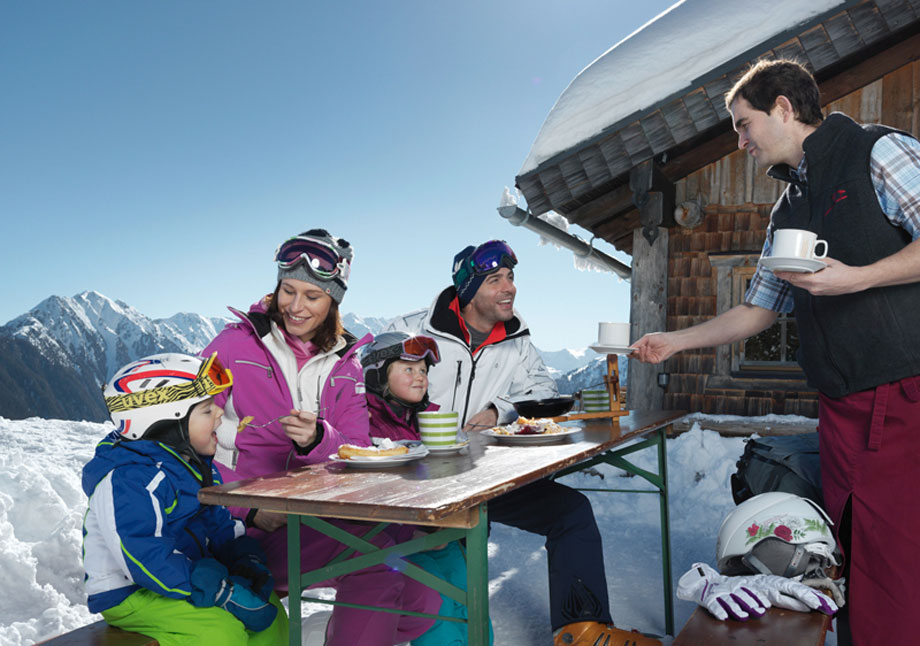
… 1 118 ropeway installations and 1 530 ski-tows as well as 23 700 hectares of ski slopes (of which 70 per cent can be covered by artificial snow), generating a cash turnover of around 1.4 billion euros, and turning Austria – where a total of 43.6 million skiing days are counted – into one of the top skiing destinations.
… numerous convention hotels, 88 convention and exhibition halls and many other special event locations, hosting around 10 400 congresses, conferences and seminars with half a million participants generating 811 000 overnights in 2021.
… about 75 thermal baths and countless wellness hotels and health resorts.
* Pre-pandemic figures
Guests in Austria
In 2025, Austrian tourism reached a new all-time high with 157.3 million overnight stays. For the third consecutive year — following the strong results of 2023 and 2024 — the country exceeded the 150-million mark. A total of 48.2 million arrivals were recorded, including 33.5 million international guests. Compared to 2024, arrivals increased by 3.1 per cent, while overnight stays rose by 1.9 per cent, underscoring Austria’s continued attractiveness as a leading travel destination. Germany, Austria and the Netherlands remained the three largest source markets, together accounting for more than two-thirds of all overnight stays in 2025.
Destinations in Austria
Tyrol remained Austria’s leading tourism region in 2025, followed by Salzburg and the capital, Vienna. Together, Tyrol and Salzburg accounted for almost half of all overnight stays, totaling nearly 81 million. Urban tourism in Austria continues to thrive. In 2025, Vienna and the provincial capitals recorded more than 29 million overnight stays — an increase of 5.7 per cent compared to 2024. Vienna exceeded the 20-million mark for the first time.
On average, guests stayed in Austria for 3.3 nights in 2025. In the 2024/2025 winter season, average expenditure per tourist and per night in Austria amounted to € 238, while in the summer season 2025 it stood at € 193 (excluding passenger transport). In both seasons, around three quarters of the guests travelled to Austria by car, while 11 per cent arrive by train in winter and 14 per cent in summer.