ecoplus Food Cluster Lower Austria: Sustainably packaged & well connected
Date: 18.06.2025
Focus Topic: Green Tech & Green Materials
-ecoplus_WEB.jpg)
Packaging has many important functions for our food products: it protects the product, ensures optimal shelf life, enables good product handling and transportability, appeals to consumers, and ideally is environmentally friendly. A wide range of requirements that often contradict one another.
The new EU Packaging and Packaging Waste Regulation (PPWR) mandates the use of recyclable packaging, the achievement of ambitious recycling rates, and licensing fees for packaging based on ecological criteria. These obligations make comprehensive knowledge transfer and the exchange of experience between companies and research institutions essential.
To support businesses in Lower Austria on their path toward sustainable packaging solutions, the ecoplus Food Cluster Lower Austria has accompanied the project "Sustainable Packaging in a Circular Economy" (SPICE). Companies with very different packaging-related challenges were brought together with scientific partners. Under the project coordination of FH Campus Wien, and in cooperation with the Austrian Ecology Institute and Circular Analytics GmbH, a specialized, scientifically sound, and practice-oriented training program in the field of sustainable packaging was developed.
The cooperative project was implemented as an "Innovation Camp" within the qualification initiative of the Federal Ministry for Economy, Energy and Tourism (BMWET), funded by the Austrian Research Promotion Agency (FFG). This funding instrument – and thus the SPICE project – enabled tailored, application-oriented knowledge transfer from the scientific institutions mentioned above to the participating companies. Nine companies from the food production and food packaging sectors took a close look at their product ranges, the packaging materials used, and existing packaging lines, exploring how these could be further developed to meet the future requirements of the PPWR.
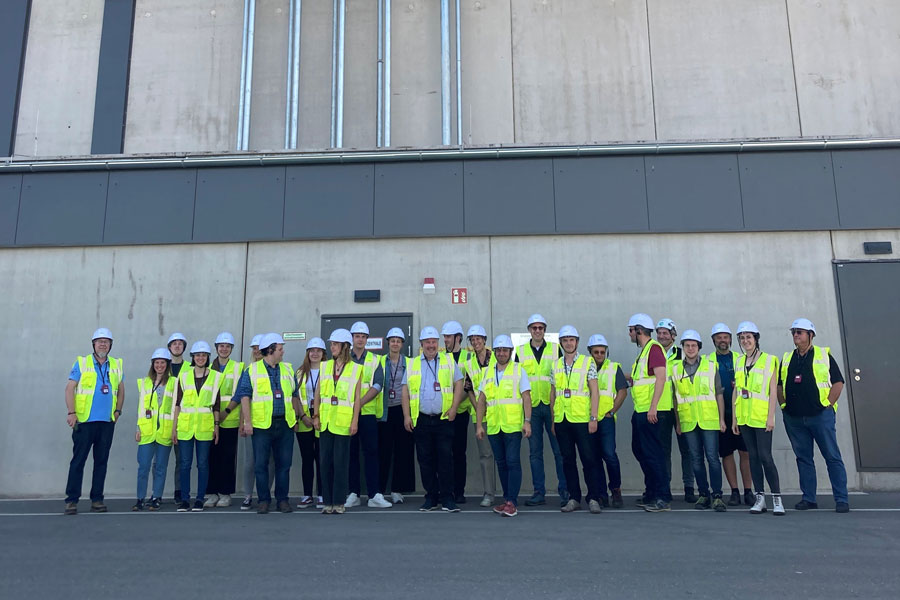
In addition to knowledge transfer, participants particularly valued the cross-industry exchange between food producers and packaging manufacturers. Expert input and group workshops were complemented by excursions to a plastics sorting facility and a paper manufacturer. Thanks to the network established within the project, participants can continue to discuss future challenges and further questions with industry peers in a trusted setting.
Web links for further information
- Insights into Packaging: From Paper Production to Plastics Sorting (in German)
- SPICE – Overview of the FFG project (in German)
Contact
Eva Voglauer, Projektmanagerin, Lebensmittel Cluster Niederösterreich
e.voglauer@ecoplus.at